Monday, September 28, 2015

When Given a Choice, Choose the Sweetest Grapes


I know you have heard of the expression sour grapes. But have you ever heard the story of the sweetest grapes? It goes something like this. . .  
An American woman was trying not to be disappointed. A cold beach day was better than a hot work day, she told herself as she walked back to the studio she had rented on the Adriatic coast. 

As she walked up to the door, the owner’s elderly mother stood out front in a black housecoat with flowers, “Dobrodam!” She exclaimed taking the younger woman’s hands in hers. She reached for her heart and motioned upwards toward the sky, talking in Croatian shaking her head. The American woman smiled. The only thing she had understood was catastrophe and assumed she was talking about the wind and colder temperatures.
“It’s ok,” she assured the woman, “It’s beautiful.” She motioned to the sea and the grapes that hung on the vines above their heads. The older woman grasped her hands tightly and reached up to pat her on the shoulder, still shaking her head. 
The American woman smiled and went into her house to prepare for her day. “Bitte?” the older woman’s voice came through the door. She continued talking again in Croatian and the younger woman came out to find out what she wanted. She was holding a pair of scissors and pointing at the grapes overhead. 
The younger woman looked at the rickety metal ladder and agreed to cut down the grapes for the elderly woman. The elderly woman proclaimed, “Super!” over and over again as she held the younger woman’s pants. The younger woman clipped the grapes and passed them down to the woman’s wrinkled hands. A strong wind blew, and the older woman exclaimed something the younger assumed was "Be careful young lady!" or "Wow look at this wind!" They smiled at one another, understanding, even as they did not understand.
The elderly woman motioned for her to get down and reset up the ladder two more times and they repeated the story. The younger woman cut and handed, the older woman received and proclaimed, “Super!” smiling ear to ear.
After filling the small plastic shopping bag, the older woman asked for something the younger woman could not understand. She thought maybe she heard wash and offered the elderly woman a bowl. “Momento, momento.” The older woman said as she hobbled away.
A moment later she was back, the grapes in the bowl freshly washed. The elderly woman smiled and told her something that the younger woman assumed was, “Please eat them - they are for you.” 
And so she did.
They were the sweetest grapes she had ever had.
The two women smiled at each other and the older woman clasped her hands in her own. She patted the younger woman on the shoulder and smiled from ear to ear, her wrinkles deepening around her mouth and eyes. The words and the smile floated in the air as she turned and disappeared into the house. The younger woman smiled, assuming she had said "Welcome to my home!" or something of that nature.

Thursday, September 24, 2015

You Don't Know What You Don't Know


We arrived in Sarajevo via train from Mostar in the morning. Previously, most of my travel to date had been small towns or cities or sparsely populated islands. I had forgotten what it was like to be in a capital city of half a million people. 
We took a tram from the train station to the old section of town and as I got up to get off, I put my phone in the front part of my small backpack for a second to take the handrail and descend from the train. A man in front of me blocked my way. Kristia, a young women I had met on the way to Mostar was already out on the street waiting for me. A man behind me bumped me, and I looked over my shoulder for a split second to let him know that I was trying to exit the train. Finally, the man in front of me began to move, I exited the train onto the sidewalk and the tram departed. Kristia reached for her phone to check the directions to the hostel and it was then I realized what I had done. I had put my phone in exactly the place to have it pick pocketed by the two men on the train. Classic traveler’s faux pas! And the worst part – I had known it. I opened the compartment and sure enough – gone – all my photos, all my contacts, all my notes and yes all my passwords on my non password protected phone. Crap! 
In case you are curious – it takes approximately three hours to go about the frustrating process of resetting every password you have, reporting your phone lost/stolen, seeing if you have insurance, seeing what you remembered to put on the icloud, remotely adding a password and suspending your service. Certainly it was annoying. But in the grand scheme of things – really not something worth stressing about, but hard to avoid that feeling of “Damn it – I should have. . .”
I could feel the frustration in my body and tried to shake it. I knew it was material, and I needed to just let it go. Being in Sarajevo was just the thing to help me put my little inconvenience into perspective. 
Over the course of the next 7 hours, we walked the streets of Sarajevo taking in the Turkish influence on the eastern side of town from centuries under the Ottoman empire, the Austrian and Hungarian influence on the western side of town. Mosques and minarets, a catholic church Notre Dame style, a Franciscan church and both a Sephardic and Ashkenazi synagogue gave the city an international feel that I had not experienced in the past. On the Turkish side of the city, small alleyways were lined with coffee sets, rugs for sale and copper offerings. Men in Kufi praying skull caps sat together on low benches drinking Bosnian coffee solving the world’s problems. Women in hijabs walked holding their children’s hands. Further down the street past the cathedral, the streets widened, bars lined either side of the street and patrons sat drinking beer solving the world’s problems as well. Everyone – on both sides - was smoking. 
And everywhere you looked, there were ruins, shells of buildings that had once stood before the war, in other places buildings still intact, riddled with bullet holes. The war had ended 20 years earlier, but all around us was the evidence of the devastation. I looked at the people walking around –men and women my age, younger and older. What had they been doing while the war raged on for almost four years?

The two-hour walking tour we took gave us insight into the different parts of the city and our tour guide, in typical Bosnian fanfare told each story sarcastically and with a punch line at the end. This was the third Bosnian man we had spent time listening and talking to, and I was starting to get the impression that Bosnians were not only proud of their culture, they had a bit of a dark, sardonic sense of humor. 
About every 30 minutes, I would look at Kristia and unrelated to what we were learning and observing I would say something to the effect of, “Do you know what’s most annoying about having my phone stolen. . .?”
Actually nothing. I mean of course it’s annoying and frustrating. 

But again I go back to what I said before – in the grand scheme of anything – losing a replaceable material object that I am far to apt to look at instead of looking around at my surroundings – is nothing. 
I was about to have that shown to me in the Srebenica Genocide Museum off the square in front of the cathedral. 
The thing about not knowing what you don’t know is that you don’t know that you don’t know it. I don’t know if that makes sense to you, but sitting here right now, rain falling on a metal roof outside the window of my hostel, an old building with a broken window in my sight, I know I am forever changed by what I saw over the last two days. I am struck by what I didn’t know.
In April of 1992, I was busy studying for my final exams in high school, deciding with whom to go to prom and picking out a beach house to spend senior week with my friends. At the time, my biggest conundrums were if I should take my boyfriend who had already graduated and might be bored or go with a friend. I know what your thinking, “OH MY GOD! However did you decide that – what a major catastrophe!” And I get it that high school kids – and maybe college ones too- are narcissistic and self absorbed and feel that the world revolves around them. I didn’t realize that at the time that I was like that, but if I hadn’t been, then this visit to Sarajevo’s tunnel of hope and the Srebenica Genocide Museum wouldn’t have thrown me so much for a loop. 
Sarajevo was besieged by the Army of Republika Srpska on April 5 of 1992 with the intention of creating a new Bosnian Serb state after Bosnia – Herzegovina declared its independence from Yugoslavia. Most people will remember seeing this on the news in the spring of that year. The thing is that the Serbian army figured it would take about four days for them to take the city. . . but the Sarajevans dug in the their heels and refused to quit in a siege that lasted 1,425 days. That’s over 4 years. That is the longest siege in the history of modern warfare. During the siege, access to water, food, and electricity was cut off completely. Buildings were destroyed and the entire city was a target. I tried to put myself at 18 in the shoes of a Bosnian 18 year old. 
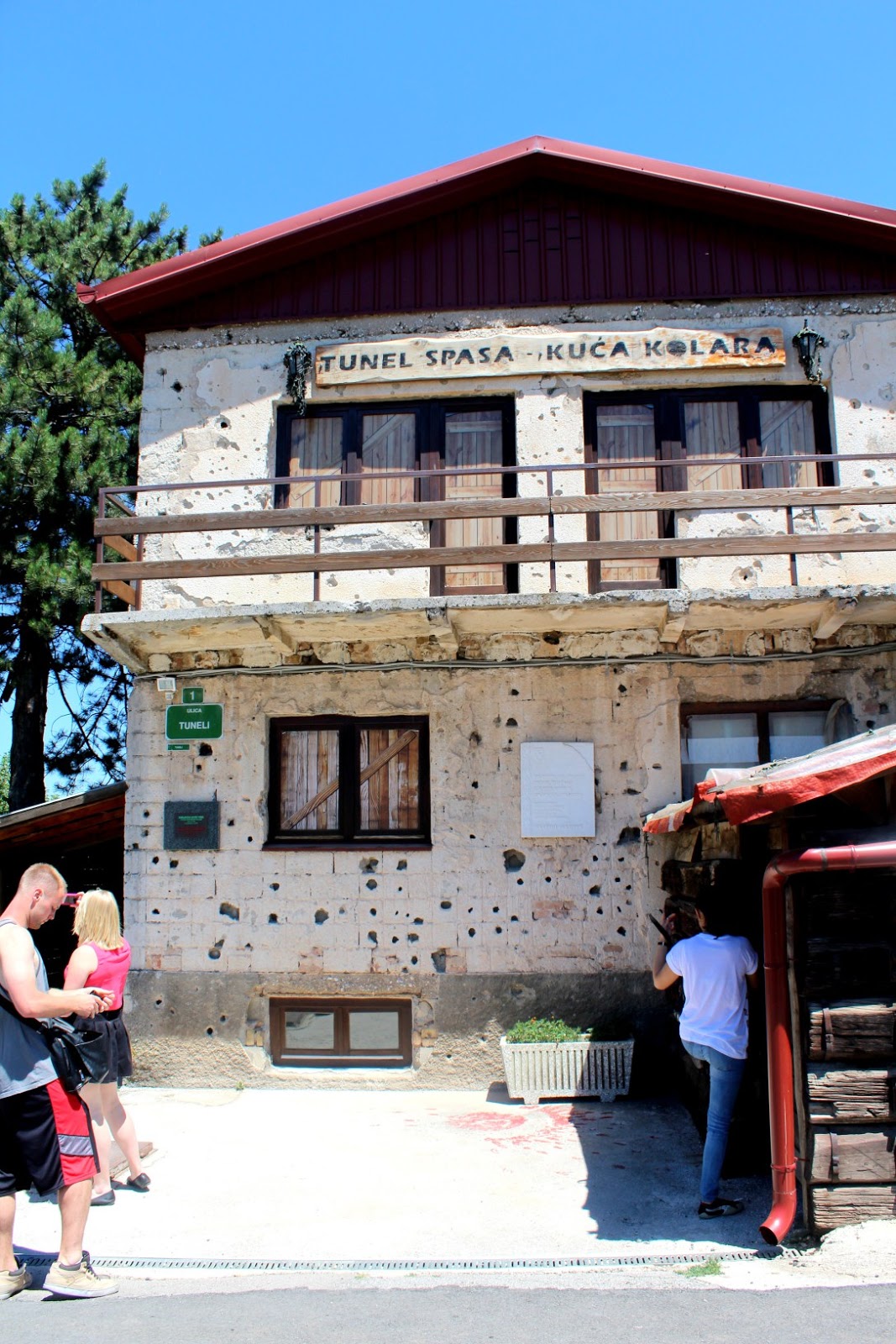
From 1992-1995, all regular functioning activities in Sarajevo ceased to exist. And while I went to class and frat parties and lay in the quad, 18 year olds in Bosnia cowered in basements praying their apartment building would be spared. More than 11,000 of them, many of them civilian men, women and children were killed. The only access to any kind of supplies, food or water was through the tunel spasa or tunnel of hope, located under a home near the Sarajevo airport. In just 4 months in the spring of 1993, a Bosnian engineer created the plans for the tunnel’s construction and was dug by hand for 24 hours a day. That 800 meter tunnel was the only access point to humanitarian aid during the war. 

Now maybe you knew all of that – again, you don’t know what you don’t know. I remember seeing the images of the war on the television, reading it in the news, but until I landed in Bosnia earlier this week, I have to say, I just think I really didn’t know.
Samija was our tour guide in the Srebenica Memorial museum. She was just five when the war began. Her descriptions of the genocide and Srebenica as a “safe space” in addition to her later stories of her own experience changed me forever. Samija stood in front of us in the foyer of the museum, dressed in all black and fidgeting with her ring and black shirt and pants before she began, “You may want to take a seat,” she gestured to one small wooden bench in front of her, “I am going to give you a brief – not so brief introduction – before we proceed to the rest of the museum.” Samija was a slight woman and she began by apologizing for her raspy voice – likely from having given the tour multiple times a day every day that month. 

The 20th anniversary of Srebenica’s mass killings had just passed in July, but you could feel that for Samija, the pain she felt was raw, as if it had happened recently.
She gave us a brief history of how the war began and the events leading up to the UN naming Srebenica a “safe” area for refugees from other Bosnian cities under attack by the Republic of Srpska. The two documentaries we watched and her account of the events leading up to the massacre sent chills into every part of my body. One of the photos on the wall in museum were the words graffitied, United Nothing which described the betrayal that the people felt after having traveled all the way to Srebenica only to be turned away to meet their death. 

She talked to us for more than an hour in a gallery the size of a studio in San Francisco and still I wanted more – how had this happened? How had the UN peacekeepers just stood by and watched it? How had military leaders around the world just closed their eyes and allowed more than 8000 Muslim boys and men to be killed execution style and thrown into mass graves. The Srebenica massacre was labeled the biggest genocide since the Holocaust in the 20th century. 

After the Holocaust, we said, “Never again.” We blamed the German civilians for turning a blind eye, for saying that they didn’t know about the concentration camps. And this before the Internet, before the world could watch what was happening. 


 In July of 1995, I began packing for my year abroad in Spain. I was leaving the country for the first time. Again when I think back to what was happening my head – I was worried about leaving my boyfriend and if we’d stay together. I was nervous I’d “miss out” on my senior year. And while I was “busy” worrying about myself, men and boys between the ages of 12 and 77 were being separated from the women and shot execution style in school playgrounds outside of Srebenica. Ethnic cleansing was happening. Still to this day, over 1000 of the men and boys killed in the massacre remain unidentified and missing. Sometimes over three generations of a family were knocked out, and there is simply no one to provide a blood sample now to match the DNA. And still today, mothers and wives wait. They wait for their sons and husbands to be identified so that they can finally put them to rest.
I felt like I had been punched in the stomach. Samija’s passion oozed out of every pore of her being. She was outraged and overwhelmed with emotion, as she led us through the gallery and showed us the heinous acts of violence and racism that had occurred. “It happened here. It can happen in any society.” She said over and over again.
When the tour concluded, my head was spinning, my heart was full and tears welled, waiting to spring. Kristia and I walked into the lobby and I asked Samija how old she had been. “I was 5 when the war began and 11 when it ended.” Her voice wavered as she spoke and her eyes were red around the edges. “We had to eat this –“ she interrupted herself switched into Bosnian and spoke to her colleague on staff, and laughed as she continued, “horse meat in a can.” The girls both began to laugh as they recalled the taste of the meat. 
Sarajevo Rose - Red paint around former explosions 
She described the tenacity of the people of Sarajevo and showed us a woman that every day, got dressed as if there were no war and put on make up – “people had to keep living.” She looked at her feet, “But our childhood – it was stolen. I remember in November of 1995 after my baby brother was born at 7 months, I was washing his diapers outside in minus 5, 200 times, I was doing this.” 


She laughed, a bitter sad laugh. A generation of young people, robbed of their childhood. 

I wonder about as this group of young people as they come of age and have children of their own. . . the casualties of the genocide and the war in Bosnia from 1992-1995 are great. But what of the survivors? What happens to them as they try to make sense of the international travesty that happened to them in their own home.
I think about what I didn’t know. And I wonder now what I still don’t know.
In 1999, UN Secretary-General Kofi Annan wrote: 

“Through error, misjudgment and an inability to recognize the scope of the evil confronting us, we failed to do our part to help save the people of Srebrenica from the Serb campaign of mass murder.”

Our not knowing, our silence, our inability to act when action is needed allow these types of despicable actions to occur.

What will we know in 5 years about the refugee crisis that we don’t know right now? 
What will we know about the death of young black men in the United States at the hands of law enforcement? 
What will we know that is different than what we know right now about the wars in Iraq and Afghanistan in this century. 
We don’t know what we don’t know, but it is our obligation as human beings to find out.


Tuesday, September 22, 2015

Remanents of War


When I stepped off the bus in Bosnia, I knew something felt different than the previous week in Croatia.  All drama with the bus aside, which in the end was the fault of a stupid tourist trying to transport weed across a border and an ill timed flat with not enough equipment to change the tire; Bosnia could not be blamed for the delay in our arrival. 
But this morning as I headed out on my morning run, I stepped out into the courtyard of the hostel where I had rented a room with my new friend I made on the bus, and took in my surroundings. Sure it’s true that the Adriatic sea was not in sight, since I was inland and hadn’t chosen a hostel on the river (if those even existed). Nevertheless, it wasn’t the lack of the water view I noticed. 
The patio reminded me of a large cinder block. A small plastic table was up against the terrace of a house adjoining the main hostel building. A few piles of wood lay to the left of the door. A plastic chair lay lounging on its side. A huge yellow metal door rose up in front of me. I could hear the sounds of children behind the door singing, and sure enough when I pushed it open, the industrial looking building to my right with the brightly painted metal slats in the gate was labeled “Kindergarten.” 

I set off on my run down a pedestrian only walkway, which quickly turned into a rock or cobblestone like pavement that wove its way through the old town. Shops lined either side of the street offering Turkish hats, small ceramic bowls, lamps made of shiny colored glass, copper jewelry etched with small scenes of the towns and tea sets galore. Tourists were everywhere. 


Up ahead in the distance a thin tower jutted up against the blue sky – the minaret of the mosque, quite possibly the one that had called me to prayer at 5 am that morning (Don’t worry - I ignored the call being as it was almost Yom Kippur and all), jutted out against the blue sky. The river snaked through the valley, a blue-ish green water cutting into steep cliffs that ran under the famous old bridge of Mostar. The one that had been destroyed in the war and then rebuilt again from the same stones fished from river bottom by the Hungarian and Spanish armies in 2004. 

Two men stood on what appeared to be the wrong side of the railing in bathing suits. In Mostar it is tradition for a few local men to jump the 28 meters down into the cold waters below after accumulating 50 euros from the tourist milling about. I snapped a quick picture and turned around, realizing this was not the place to get in a good jog. I sidestepped two groups of Japanese, one group of French and made my way back to the paved main street we had come in on the night before too late to really take in the scenery.
A few small cafes sat on either side of the street, men sitting together drinking their morning tea and coffee. Cars lined the sidewalk, and I alternately jumped to the right to squeeze between them and the building or to the left down on the street as I ran by them. I passed by a cemetery that seemed endless, crosses and hearts and other shapes of head stones marking those that had moved on. Had they been victims of the war? I wondered.

As I began to exit the old town, I noticed a series of what can only be described as ruins. Large structures jutting up – previously windows and doors of large buildings, now a shell of a house that had once been. Large gaping holes in the sides of old buildings, juxtaposed next to new constructions, cranes in the sky and signs that read “Wifi here.” 


As I ran down the street, the houses and cafes became more sparsely placed. Teenaged kids walked across the street toward an industrial building,  “skuola” written on the road to alert the cars driving in both directions down a road made for a one way only. The sidewalk turned to dirt. Now I could see more ruined buildings on both sides of the road, a car dealership, men in hardhats digging a ditch by hand to repair the sidewalk. 

As had been in Croatia, older houses with red roofs or at times gray tiles placed in an upside down v on either side of the house dotted the hillside. Oddly shaped windows opened with heavy brown shutters that looked to dense to bother to push open. Nestled among these old houses, some still intact, others shells of their former selves were these large rectangle boxes, gray on every side, was clearly new construction. Square windows placed on the sides. The roofs, though still in an upside down v, were now made of something synthetic. 

I came back from my run and found Almir, the owner of the hostel with his brother. He looked about 35 years old and I tried to put myself in his shoes. He must have been about 12 when the ward started in 1992 and about 15  when it ended. I wondered what his experience had been. 

Almir asked me if I had ever tried Bosnian coffee and when he found out I hadn’t, he said, “I will prepare it to you. You must to try. It is not about the coffee. Bosnian coffee is similar Turkish coffee, but different. But it’s not about coffee. It’s social. You must to try.” He went into the kitchen to prepare the coffee. My mind was full of questions I hoped he would be open to talking about with me. 

As it turns out, Almir was more than happy to share his version of the events of the Bosnian war, “We like to tell our side of the story,” he assured as he scooped out the foam off the top of the coffee into two small tea cups on china tray. “You must first dip the sugar cube’s corner into the coffee like so,” he showed me with his, “then you eat it and then slurp the coffee while the sugar is still in your mouth. If you don’t slurp, you are doing it wrong.”


I dipped, I bit, I slurped. He nodded and began the story. 

“Imagine having no food, no water, no electricity for one day.”

I nodded trying to imagine, but knowing I couldn’t come close to actually imagining what that must have been like.

“Now imagine it for 3 years. School ended. Life ended. We hid in the basements. The shelters. We went to sleep every night. And we thought tomorrow we will probably be killed. There was no food. We saw a pigeon and we caught and ate the pigeon. In 1993, United nations dropped food for us – flavored rice, but it was never enough.”
I shook my head in disbelief. I remembered my life in 1992. My freshman year at Penn State. There was nothing I could say and so I nodded for him to continue.
He continued as if telling a story that had happened to someone else, “At the beginning it was the Croats and us against the Serbs. They were on the left of the river. We was on the right. But then the Croats. They stuck a knife in our back and made a deal to divide up Bosnia into two parts with Mostar being the capital for Croats. And then we were being bombarded and bombarded from both sides. All the bridges were collapsed. Except the old bridge. We knew they were trying to crash that one too. But it was 500 years old. We cover it with wood and tires.” He takes out a small book to show me some photos. 
“You know there is a tradition for boys in Mostar. When they become men – at 16 or 17 or 18 – they must to jump the 28 meters to the water from the old bridge. But when the war start in 1992, I was only 12. I still had many years to go. But I thought to myself, well if I die before I jump I will never be man. So in June 1993, when I am 13, I jump. That November they crash down the bridge. It is the saddest day in the history of Mostar. I remember it. I had finished studying in the shelter. I had come out and people were laying in the street, crying. I asked them, ‘what happened?’ When they told me, I didn’t believe it, I had to see it with my own eyes. When I did, I cried too.” 
I felt the lump in my throat growing. Here in front of me was my contemporary. A man only 5 years younger than I, having experienced a different sort of entry into adulthood. The more he talked, the less I could imagine and yet with each passing moment, the vivid picture he painted, would never be erased from my mind’s eye again. 
“Now we try not to think of those days. You should have seen when the bridge ceremony happened!” He sits back and smiles – every president in Europe was here – even Prince Charles! It was something else.” 

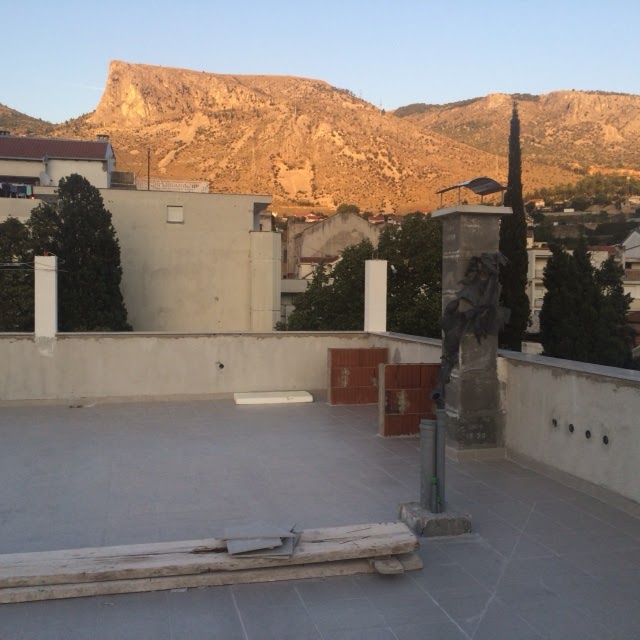
I am sure it was. Later Ahmir shows me on the roof deck where he will finish building the bar for future patrons, the bathroom so they won’t have to do downstairs and the shared grill space. He is excited by the prospects. “There is much to do! Especially since hostelbooking rated us number one last year in Eastern Europe.”
I asked him how he coped post the end of the war with all that he experience and all that he saw. 


He looked at me confused and said, “The war is over. We moved on. We try not to think of those days and what was lost. People are human. They are not Bosnian or Serbian or Croatian. That is not what makes a human. People are good no matter where they are from. You must judge them on who they are not where they are from.” 

Truer words have not been spoken and yet, war rages on all over the world.


Monday, September 21, 2015

Mind the Mines as you Mine your Mind


Up until now, while I had read about mines, I hadn’t really thought much of them. They were this idea that existed. From what I had read, the unexploded mines were largely in fields or dirt roads that were infrequently visited and that your best bet was to avoid those types of roads without a local guide and also to heed any types of signs or structures that indicated not to enter or go near a place. Easy enough. Or so I thought. 
I laced up my shoes for a run. It was already 83 degrees outside and if I didn’t get going soon, I would be running in the 90 degree September sun. So much for the end of summer I keep hearing about. 
I knew I wasn’t going right out of Villa Anita since I had already done that twice with the mountain bike and in the van on the way to the National Park the two previous days – both decidedly up, up, up. So left it was. I took off up a slight hill on the paved road hugging the coastline. Past red roofed houses, sobre (room) advertisements, small dinghies moored to lopsided docks and kids floating lazily in the water. After a half a mile, the paved road ended and my choice was to veer sharply left up an 8% grade hill (no thanks) or continue forward onto a dirt road lined with houses on either side. No brainer. I continued on, up the smaller hill along the dirt road. The houses gave way to more trees and I could see the town of Sobra disappearing into the background. “Beautiful” was all I could think . .oh yeah, and “holy hot man and oh my god is this hill ever going to end?” 
The road veered left and then right, the water sparkled a blue green below and I stopped to catch my breath and snap a photo. “Unbelievably breathtaking,” I thought shaking my head and walking for a second before continuing to run another mile. I loved running in new places. As always, an amazing way to discover something I might not otherwise have seen. Now the houses had disappeared and road seemed to veer left toward a cliff. I wondered what was around the bend. And then I saw it. A gaping hole in the ground surrounded on all sides by the types of barriers used to keep crowds in control during parades or marathons. 


I stopped. 
Breathing hard – from the fear or the uphill to be honest I am not sure – “was it? Could it be? Had the path been well worn? Well there had been houses. When had I seen the last house? Think Jen. Think. Would there have been mines on the islands too?”
 Now I was wishing I had done more research. Now I was hearing my dad in my head, “Really Jennifah? Croatia? What do you wanna give me – a heart attack?”
From what I had read, the unexploded mines were largely in fields or dirt roads that were infrequently visited and that your best bet was to avoid those types of roads without a local guide and also to heed any types of signs or structures that indicated not to enter or go near a place. Easy enough. Or so I thought. 
Was this isolated? Was this infrequently visited. I had been standing in that same spot staring at the hole for what seemed like an eternity. Well what was there to do except turn back. So I did. Back around the curve, down the hill and around the other side, each footfall precarious, my heart in my mouth. Would it be better to walk. I pictured myself being tossed into the air, landing with no limbs on the rocky dirt road. My dad’s voice ricocheted into every corner of my mind. My heard raced at a 180 beats per second, now I knew it was fear and not the running increasing my pulse. 
I ran, fear all around me. Wondering how people lived with this uncertainty. Feeling once again my privilege all around me. . .this had been my choice, but this was there life. 
And then just like that, boom, I was back on the paved road, running free of mines. Free of fear. Free as I had always been. I stopped in front of the only market in the town and went in to buy a juice. “Dobro jutro,” The familiar girl behind the counter greeted me. I smiled and returned her good morning greeting. 
“Hvala,” I said as she gave me my change. 
She smiled, “You’re welcome.” 
“Hey, I have a question,” I stood wondering if the question would offend, “Are there still mines on the island?” 
She shook her head, “Here no.” She smiled again. 
“I went running up the dirt road this morning and thought that maybe. .  .”
“Oh no many local people use the roads every day,” she assured. 
And just like that it all fell away. No mines had exploded me into a million smithereens. No one would be waiting for weeks for word from me without a peep. My dad would not tell me he told me so. At least not about that. 

Later that day installed in my new place in Sapulnara, my host, Paula told me, “There are 4 sandy beaches here. One down those steps,” she gestured in front of the house, “one about 20 meters, one 500 meters near the beach bar and one if you keep going down the dirt road about 1 kilometer to a place called Luna. It is very beautiful. You must see it.” I pictured the dirt road she was describing, similar to the one I had run on that morning. I knew when I went my mind would not be racing to exploding mines and isolated dirt trails though when I went later that day, it is how it appeared. 
Paula, 25 years old, studying economic tourism at the University in Dubrovnik, was happy to help her parents rent out the extra apartment next to their own with a view of the Adriatic sea and grape vines covering the patio. She told me that tourism is a way of life now in Croatia and that if you don’t work in it, there wasn’t much to do. I asked her how she felt about it and she responded, “Oh yes, I like it very much. After the war ended, there was a time of no tourism. But now it is even expensive. Much people will want to visit on their holiday.” Paula’s parents nodded behind her smiling and offering me an apple pastry and orange juice. “Sit. Relax. Enjoy.” Paula extended her arm to a small table over looking the sea. “We are here for you.” 
Later as I walked down the dirt road to the beach called Luna, I thought about Paula and my fear earlier that day. A car with two young men passed me slowly and I smiled at my own ignorance. I reached the end of the road. A sign read “Beach” in English with an arrow pointing down a steep set of steps. 


The boys who had passed me were still in the car. I descended down the steps to find a cove in the shape of a quarter moon, water greenish blue, the beach empty. I left my bag and waded into the warm water, small fish swam around my ankles.
I lay on my back and stared up at the blue sky. No clouds in sight. I saw one of the boys from the car come down first with a backpack. Then return up the stairs. A few minutes later he returned carrying an empty wheel chair. Then finally his friend. He wheeled his friend to a shady spot and they high fived and then laughed. Then he took off all his clothes and now completely naked, ran into the water to my right. The friend pulled out a beer and his phone, cracked the beer, smiled at the sky and began to read.


Sunday, September 20, 2015

In Search of . . .

I've been thinking a lot about the refugee crisis lately. I know we all have. As Hungary erects a wall and the refugees reroute through Croatia, I am struck by this paradox of their experience fleeing their home country in search of a better life, while I explore mountains and islands and desolate beaches. The privilege I have does not escape me.  

Yesterday as I walked along a path, I kept picturing having to flee my country, my home. To run away from something without a clear picture of where I was running to. . .  fear and uncertainity at every turn. 

I wrote this for them.
In Search of . . .
She had been walking for days. Her feet ached everywhere. She had blisters on her heels, her toes, the tops of her feet. She had blisters on her blisters. She clutched her son to her chest, singing softly to him as they walked and walked and walked. He whimpered, his face wet with tears. His cries had long since stopped in earnest realizing that there was no food to eat, no water to drink.
How much longer till they rested? Her mind raced, flanked on either side by strangers, her people, tied to her in a common plight – to flee. They had been right – she should have left when Rahmad had. He likely had made it into Hungary before the wall had been erected. She pictured him now, his dark eyes smiling, sitting with a family in Germany eating a pretzel, drinking a beer. Maybe she would be able to join him. Maybe the immigration officers would take it easy on her and her small boy wrapped to her chest for whom she fled. Maybe she would find her family. Maybe.
A woman in front of her stumbled and fell and she stopped just short of tripping over her. She paused to help her up, her wrinkled hand shaking as she placed it in hers.
“Thank you my heart,” she whispered her voice low and gravely, “I know what I am running from. . . but I ask you what are we running towards?” She shook her head slowly, “What if – what if they turn us away?”
The young woman shook her head fiercely, “You mustn’t think like that Ama. They will not turn us away. They can’t! They are human beings too!” But in her head, she wasn’t so sure. There were reports of terrible treatment. Of people’s inhumanity. Of fear and hate. Of mobilized forces to keep them out. To keep them out from what? Yosef began to cry harder against her chest as if sensing her mounting anxiety.
“You must be strong,” she squeezed the elderly woman’s hand wondering why at this age she had decided to flee. She hugged Yosef closer praying that he would never remember the first years of his life. “We all must be.”

Thursday, September 10, 2015

Stranger than Fiction - You Can’t Make This Stuff Up


I am a bit behind in my posts due to some internet delays. This one I wrote while still in NYC on August 23rd. I'll catch up eventually. . .

Coney Island
Stranger than Fiction - You Can’t Make This Stuff Up 
“When I was in my prime – I’m 57 now – but back then, when I was 20, I coulda had the pick of the littah. But we woulda neva went to Coney Island back then to get a girl. I mean, unless we wanted a crack whore. But that was the 80s. Before AIDS. Before we hadda worry.” I felt my friend, Jen, kick me in the calf for the 4th time in less than 20 minutes. Was this guy for real? You couldn’t make this stuff up if you tried. 
We had been sitting on the boardwalk in Coney Island just to the north of the parachute jump having a beer out of plastic cups watching the world go by. We were thirsty after walking the length of the boardwalk and had chosen a prime people watching table to sip our cold IPAs as we watched the masses of humanity; all crammed into the small area between the pier and the border of Brighten and Coney Island. Refusing to fan out in either direction, the umbrellas seemed to pile on top of one another, music blasting out of multiple speakers, intermingling with one another, beach blankets overlapping. In front of us, a woman was now topless at the water fountain using a water bottle to wash the sand off her exposed breasts. No one seemed to bat an eye. 
There were two young girls at the plastic tables and chairs where we sat, the rest of the tables all occupied, but soon after we arrived, they finished their slushy piña coladas and left, leaving the two chairs open for the next patrons.
Popeye, as we came to find out later, joined us then – a man in his early 60s, wearing a white tank top, freckles dotting his exposed reddish biceps. The man with him remarked that he preferred to stand, a baseball cap pulled over his dark, weathered brow. “Cheers,” he offered and held his half filled cup out, smiling at us with a toothless grin. “We’re waving g-bye to my daughter,” the man in the tank top said as he waved at the ocean.” “She’s headed to Bermuda and Florida on a cruise,” the friend added and motioned out to a large ship in the distance. 
“You girls ain’t from around here,” Perry, the friend with the wide toothless smile proclaimed. “We been here all our lives,” he said proudly. “We seen it all.”
“Yeah but this place used to be scary,” a new friend that had just arrived added. His gold chain and crucifix caught in the tufts of hair on his chest, as he stood in front of me momentarily obscuring my view of the beach goers. 
“My motha always told me to never wear gold to Coney. She said it was dangerous. Though I gotta say that the only time I was evah robbed was that time when that prostitute stole my chain. We had just finished a half and half and I was tired. She said, ‘yeah baby, I’m sleepy too.’ But when I woke up, she was gone and so was my chain. Luckily I had my wallet down my underwear and I was asleep on my belly.”
The three men laughed and Jen kicked me again under the table. We drank just a little bit faster. “Those were the days – I was bigga then.” The man they called Popeye offered. “I was a body builder – with Schwarzenegger and others too – I knew them all. Thems guys  - they was huge. 6 foot 8, 6 foot 3. They dwarfed me. I and was pretty big back then.” Perry bobbed his head up and down above him, slapping him on his shoulders in agreement.  
He continued not waiting for us to comment, “You know that Trump guy – now he has the right idea – it’s enough with those Mexicans. We should close all those borders.” Jen leaned back in her seat and picked up her phone. The air was thick with discomfort. I could feel my face form a tight lipped smile. “What? You don’t agree?” I shook my head, opened my mouth and then closed it again thinking better of it, knowing that it was time for us to move on. We had had enough Coney Island for the day. We drained the last of our beer and stood. 
“Oh you’re leaving?” Popeye said surprised, “Take care.” 
“Be careful girls,” Perry called after us. “Coney Island’s a jungle!” we heard as we walked back down the boardwalk, across the crowded streets with $3 egg creams and hot dog eating contests. 
Past the Freak Show and Nathans offering us its historic hot dogs, past the funnel cake and the soft serve ice cream. Back to the subway D with a new mixture of characters with their myriad stories that you couldn’t make up more creatively if you tried. 
Sometimes reality really is stranger than fiction.  

Friday, August 28, 2015

Nothing New and Yet It’s All New


I left Jen’s apartment on 172nd street at 7:30 to go for a morning jog in Washington Heights. I ran along Riverside drive and through Hudson Heights up and down hills I didn’t know even existed in NYC. Later, I walked across town on 125th street through Harlem to catch the Metro North train out of the city to visit a friend that moved to the “country,” just north of the city along the Hudson. 
 
What struck me the most about the morning were not the views of parts of the city I hadn’t seen before, but the smells. As I hit the pavement on 172nd and made the right onto Fort Washington, I could have closed my eyes and known that Thursday must be trash pick up day. The heat already reaching 80 degrees at 7 am hitting the piles of trash encased in plastic bags on the sidewalk, warming up the contents, sending the aroma wafting into the air, as they awaited the inevitable trip to their final resting place in New Jersey’s finest landfills. 
Later, as I walked east on 125th street through Harlem past the Apollo, past the group of veterans in full navy attire, I closed my eyes and breathed in deeply. Smells of sausage sizzling in oil escaped the greasy spoon diner to my left, and mixed together with the sweetness of Shea butter and Nag Chompa being sold from the stand on the sidewalk, coupled with the ever present sweet smell of trash cooking inside their plastic bag homes. 
There is something so interesting about walking in cities. Especially big cities like NY. Each neighborhood melding into the next. Last night Jen and I met up at 63rd and Amsterdam at 5:30 in the afternoon after I had spent the day reminiscing with my childhood and college friends. 
It was cloudy, but still hot, so we decided to walk north on Amsterdam while we figured out what to do with our afternoon. We strolled passed gazillions of tourists taking pictures and outdoor cafes, their awnings covering the patrons, chalkboard signs beckoning us to eat mussels in rosemary tarragon sauce. We stopped at a non descript sports bar for a beer, and looked on, as the 28 year old hipster bartender flirted with the young, blonde woman reading a book at the bar, golf, and tennis football showing on the plethora of tvs around the dimly lit bar. 
After one, we continued on through the Upper West Side, the occasional old black lady pulling her grocery wagon juxtaposed next to the team of 20 young, white men finishing their soccer game in the park, all in matching tshirts hungry for their order of 15 wings at the “Dive Bar” on the corner of 96th and Amsterdam, nothing divey about it - except the name. 
At 106th and Broadway, as the Upper west side begins to give way to Morningside Heights, students mix with financial venture capitalists, and markets lure you in with colorful displays of fresh fruit. Plastic containers neatly packed with organic, fair trade chocolates for the taking, along side Chobani yogurt of every flavor imaginable. There our stop was a beer hall, the ABVs listed neatly next to each variety, the descriptions of porters with deep chocolate overtones or IPAs with hints of lemon or grapefruit; TVs lining the wall above the bar giving way to football and baseball, both together indicating that fall had indeed arrived. 
Ready to venture back out to the street, we continued on up into Harlem and for many, many blocks, there were no more places to stop at 8:00 on a Thursday night. The stores we did passé had their gates drawn securely down, the only movement the 1 train coming up above ground and rumbling past us, as we meandered through the dark night. 
For more than 30 blocks we walked. Passed Jumbo 99cent stores, passed the Diamond pawn shop, passed a check cashing place, and some small Latino markets, all closed for the night. Then out of nowhere, sticking out like a sore thumb, next to the Hookah Tobacco, “The Draft House.” A light skinned black man with a black knit cap, black glasses, and a neatly manicured beard asked us for IDs and whisked us into a world of all European craft beers and a menu filled with $15 appetizers and eclectic patrons. The sink in the bathroom poured out water from a fountain like faucet into a deep basin and upon inquiry we discovered that the location had opened only 3 months earlier. The bouncer, Francisco, or Paco – Paquito – he later told us grew up on 142nd in this neighborhood after he had moved here from Mexico. His father a Dominican baseball player, his mother a waitress from Mexico – they had met in Texas and fallen in love – over 30 years earlier. He told us he had gone to school in the neighborhood, but that he hadn’t finished. That school hadn’t been for him. That he wished school was just more. . . he trailed off and smiled wistfully before adding, that he hoped it was more for his 7 year old sister. We probed about the opening of the Draft House, about how he felt about such gentrification, but Paquito just shrugged, said he liked working at a place so close to his home, and that he didn’t understand what we were asking him. 
We bid our good byes and wandered back out into the night – just 30 more blocks to go in the beginnings of a drizzle. We lamented our shoe choice – she in loafers and I in flip flops, but now we had to make it – we were so very close. We strolled through Washington Heights, passed the barber shops on Broadway and 160th – card tables set up outside of them – groups of 6 -10 men – likely Dominican - playing dominoes on the street, clips of conversation in Spanish floating into the night. We walked passed a group of teens dancing samba on the sidewalk. Passed the umpteenth McDonalds serving more than 99 Billions, passed yet another Dunkin Donuts displaying Boston Creams and Coffee regulars, passed the Claudia’s Fashion selling this season’s discount summer dresses and el Pitallito restaurant tempting us with their nachos con chorizo and fruit stands, mangos, peaches, nectarines and avocados arranged artistically in the drizzly night. 
We arrived at 172nd, tired but satisfied. But before walking the 5 floors up to call it a night, we did what any self respecting wanderer of the New York night would do . . .we grabbed a slice. Dripping with grease and cheese and just the right amount of tangy sweetness in the sauce. 
Our feet on fire and our bellies full, we slept like the dead, despite the heat, the sound of the fan lulling us into sleep.

Tuesday, August 04, 2015

You Should Be Excited!


People keep asking me if I am excited. People keep telling me that I should be excited, “Oh my god! You have a year off! You are sooo lucky! You must be soooooo excited. I wish I had the year off."
Wanna hear the thing about it? I am not sure that I am. 
I have been feeling something lately though – a weird feeling. A sort of nagging. I keep thinking, "What is that feeling? And then this week, finally, sitting staring at the Pacific Ocean in PB, I figured it out. It’s a feeling of missing out. 

Can you even have FOMO for the start of the school year? That doesn't even make sense given that I am on a sabbatical. Though those that know me are likely not that surprised.

Yet, nevertheless it’s true. I feel sad that I am not writing a letter to staff, that I am not the one looking for a new ELA teacher for 8th grade  and a literacy coach or planning what we’ll do for R’s memorial. Pretty narcissistic I know. But hey, I call it as I see it.

I feel sad and maybe a little guilty. It feels so privileged to have the  year off. Self indulgent and privileged. I know guilt is overrated and not that productive. But I can't help it, I'm Jewish. Feeling guilty is like breathing. 
Here are some things I know:
1. I am not excited,  yet people want me to be, so sometimes I say I am.
2. A year is a long time.
3. At the same time, a year is a blip in time. 
4. It is hard for me to not check my work email or do work related things or over commit myself.
5. I feel like I should have to do a school project or a volunteer stint somewhere or just not be allowed to visit anyone I know or anywhere I’ve already been.
6. It is strange to not have to be somewhere. 
7. It is even stranger, and somewhat awkward, to not have to be responsible for anyone. 
8. I wonder if I will still be a question mark after this year is over.
9. I wonder how this year will change me or my life. 
10. I worry it won't. 
11. I worry it will.  
And so it begins – as most things do, with a bit of mixed emotions, trepidation, a lot of questions and maybe just a little bit of excitement.  

Saturday, July 23, 2011

Becoming Jane Goodall

Getting to Gombe Stream is not for the faint of heart. To get here, you must do the following:

First, pretend that it is 1960 and your name is Jane Goodall and you are completely obsessed with chimpanzees. After all, they do share 98% of the genetic make up of humans.

You are so obsessed with these primates that you are willing to risk your own well being for the study of their living habits.

You set out in Dar e Salaam where your plane has landed and you embark on the first adventure: to procure public transit to Kigoma. You ask which dala dala to take but are repeatedly discouraged. You try to tell them you have been in these types of shared van situations before, but as the locals insist it will be extremely dangerous, you agree to go with Mr. Bakarti, the taxi driver who loiters near the entrance to your hotel, the Safari Inn, an out of the way establishment down a short alley behind a gate with a perpetually sleeping guard. His presence makes you feel extremely safe whenever you enter the building, his deep sleep undisturbed.
Mr. Bakarti escorts you to first a booking that attempts to convince you that in fact you want to leave Monday rather than Sunday. You insist that you do indeed want to leave Sunday and after a fruitless argument in broken Swahili and English, Mr. Bakarti, says, “Twende,” and you follow him to a second booking agent that agrees to sell you bus tickets for the following day.

Back at the hotel, you set an alarm for 4:45 am and the following morning, Mr. Bakarti is back to take you and your companion to the bus depot about 10 miles from the city center. You know you are close when traffic comes to a complete halt. You sit for 10 minutes in stopped traffic until Mr. Bakarti makes a joke about how one can often miss a bus waiting to make the right turn into the depot’s parking lot. You take the hint, pay too much for the taxicab ride and try not to get mad, knowing that taxis are notorious for overcharging tourists for their fares.

Finding the bus is an out of body experience with rows of busses ten deep and fifty across and sea of people traffic milling aimlessly around. Men at the front of each bus scream out names into the darkness of the early morning, none seem to be familiar. Now you understand why they tell you to arrive an hour before departure. You may miss this bus if you can’t find it in the chaos.

Every person you ask for help repeats the same set of questions, “Where are you going? Do you have a ticket? Let me see. Over there.” They invariably point you in the direction from which you have just come.

Finally with just minutes remaining until the 6 am departure time, night still heavy in the air, you locate your company, Adventure Connection. You sigh thinking now you can relax. But you are wrong. This is not Connecticut and you are not boarding a Greyhound bus bound for Westminster. This is Tanzania, Africa sweetheart and the adventure has barely begun. You wonder if you should have considered the name of the company, Adventure Connection as a sign of what to expect on the bus, but before you can spend much time thinking about it, someone shoves you up the stairs from behind.

To get to your seat, you must battle no fewer than three very well endowed women with babies strapped to their backs and large baskets on their heads, one man with a suitcase that definitely will not fit into the overhead and at least three toddlers standing smack dab in the middle of the aisle with absolutely no where to go. The man will succeed in shoving the oversized piece of luggage into the slot beneath the roof and as you duck underneath to find your seat, an elderly toothless man carrying 6-foot sugar cane sticks on his head narrowly misses smacking you in the face.

Then you must prepare yourself for the next thirty-six hours. You will stop no fewer than twenty times. There will be the expected stops at bus stations along the way to pick up passengers, ones to give the passengers a lunch or dinner break for no more than 15 minutes at a time and of course the ones where the whole bus empties to use the bathroom. Of course you might expect to find a bathroom or a set of portapotties at this juncture, but you would be mistaken. I remind you, you are not in Kansas anymore and there is nothing more rewarding than an African Bush toilet in the middle of nowhere on the side of the road along side of 50 of your newest best friends. It’s community building really.

You might not have expected, but probably should have anticipated the flat tire that needed to be jacked up and repaired mid trip, the money collector that fell from the moving bus (this one still escapes me) and the 6 hour stop at 8 pm since night time driving is illegal in Tanzania. Initially this is frustrating for you, but later you realize the law enforcement probably have good reason behind this law.

You resign yourself to trying to locate some edible food from the all night chicken and potato rotisserie outside the bus and watch in amusement as passengers begin to attempt to find a modicum of comfort on school bus type seat for the evening. Feet are pressed up against the windowpanes, necks crooked at dangerous angles.

After visiting the hole that serves as the public toilet for the bus toilet, you join your fellow passengers, consumer a warm beer in the warm night air and eat what an omelet made from unrefrigerated eggs, excessive salt and overcooked potatoes. Your companion attempts to eat something resembling friend chicken but gives up after five minutes of trying to rip the meat from the bone unsuccessfully. Your meal is clearly more edible.

The following day, you may not have anticipated the police interview with the man who had fallen from the vehicle or the quantity of trash, peanut shells and discarded wrappers that has ended up on the floor, but perhaps you need to recognize how very small your perspective really is on long distance travel.

By the time, you finally reach the town of Kigoma; your ankles with have swollen to the size of small tree trunks from 36 hours of bus travel. Your companion, who has twisted his own ankle on safari earlier that week, will suggest going to Kiribizi to catch the boat to Gombe stream via taxi.

Despite your aversion to taxis, you will reluctantly agree and take the ride down the bumpy dirt road the two km down to the shores of Kiribizi where you will be greeted with disappointing news. Kiribizi’s only hotel closes for the month of June and it’s back to Kigoma you will go. You will breathe deeply – inhaling and exhaling, glad that the 110 mph bus ride down unpaved, potholed road has not killed and realize that the 7000 shillings you will spend on the taxi in reality is a mere $5 and is nothing to fuss about.

You will settle in for the night after being told that the boat to Gombe Stream leaves either at 8 pm or 8 am or somewhere between 12 and 2 pm. Feeling confident that somehow the truth will surface, you set off into the night to procure a meal for the evening and possibly an adult beverage after such an harrowing bus journey. Surely the boat trip will be a piece of cake compared t what you have already endured. Of course you are dead wrong about this and later this will not surprise you in the least.

After realizing that you are the only English speaker in the entire town, you attempt to order a plate of vegetables and when served a plate of fish, you smile and nod and move the fish away from the cold, plain 5-day-old white rice that you will eat for dinner.

Later you find a place to have a warm beer. Your companion remarks, “I think I actually might like the warm beers now.” You nod and smile and know that he is also trying to convince himself of this fact. You hope that that chimps are worth the travel.

Out of nowhere appears a man who calls himself Peter. Peter speaks English and offers to cook you yet another potato omelet and you graciously accept full well knowing that this might be the only food you eat for your entire trip. It still trumps 5-day old cold, white rice and you are hungry.

Later, Peter will offer to make you all your meals for just 30,000 shillings for your trip to Gombe and this sounds easier than trying to navigate the grocery store system at night so you agree. He tells you the boat leaves from Kiribizi at 9 am. This is a new development but when he assures you that he can make you breakfast in the morning and accompany you to the port, you agree feeling somewhat more secure that you will actually arrive. In the back of your mind you feel this is probably too good to be true, but at this moment, you are too tired to argue. Later once in Gombe, you will realize he has given you six meals instead of the ten you have paid for, but as your companion likes to point out, it’s only a $10 loss and that is to be expected.

The next day, true to his word, Peter is there to make breakfast. He is running late making the meals but assures us not to worry that the boat actually leaves at 10 am not 9 am as originally planned.

Finally, you head out of the hostel, food in hand, accompanied by a well mannered, well dressed Peter who assures you that upon your return you will be welcome to stay a night in his house with his family.

You board the dala dala ride to Kiribizi and are surprised when nothing out of the ordinary happens. Your ride is more comfortable than most dala dala rides as only 14 passengers are aboard the van meant for 9. You know that easily there is “room” for at least 16 more and you hope that there won’t be a need for this.

Now a test of our patience begins. You first arrive at the beach to be told that actually the boat (originally 8 am, then 8 pm, then between 12 and 2, then at 9, no 10 am) is actually at 11 am. So you resign yourself to taking pictures with the local children and sitting on your backpack in the shade reading a book. At 11 am the departure port is empty and you walk around the beach looking for the man with the white paper that had taken your names.

You find him and point at the boat and then your wrist as if to say to him, “What’s going on with the boat departure?” The man laughs and points at your wrist as well. You shake your head and try again, “What time is the boat leaving,” you ask stretching each word out and pointing again at your arm and the boat moored off shore. The man shakes his head, nods and then laughs, pointing once again to your wrist. You realize this conversation is going nowhere fast and begin to walk around asking others that also seem to be waiting for the boat. You ask three other people about the boat’s departure time and are told no fewer than three times and with this you resign yourself to returning to your seat on your backpack along the shore. You’ll leave when you leave, hopefully sometime that day.

Finally somewhere around 1:30, the boar begins its boarding process. The boat is a 20-foot long, dilapidated, wooden boar with a small motor at the back and long wooden slats running widthwise across the length of the boat. You board and choose a seat close to the front of the boat and watch in awe as the interior fills with mattresses, cases of cola, large oil cans, mothers with feeding children, men, grandmothers, small children and ever type of package imaginable. Vendors hop on board from the boat moored to our left and begin to yell out their wares: plastic bags of water, bread, a ball that appears to be doughnut like, yellow liquid packaged in reused water bottles and raw sugar cane. Everyone aboard buys in frenzy as if they had all not just come from sure just moments earlier.

The boat fills to what seems like capacity, but like the dala dalas, the filling process continues far beyond what one would expect until every available square inch of the front, side and back, including the slats and the interior of the boat for what appears to be storage is a sea of humanity and cargo.

Now the fun truly begins. Some men thin you are a good subject for their camera phones, thought to be honest, their wives don’t seem to agree. Your companion is decidedly tense and the boar moves through he water under a mid day African sun at a snail’s pace. All around you chaos ensues. There is a man that plays both an antique version of a PSP or DS and music from his mobile phone simultaneously. Another man, seated three people away from him, also plays his music. A third man argues with his wife who is seated half way across the boat as they pass a small child back and forth between them via the other passengers.

A heated debate breaks out between what seems to be the boat’s captain and some of the passengers near the bow of the boat. He has for some reason decided to move some large pieces of cargo while we travel and while what he is saying contains none of the Swahili phrases you have learned, you gather from the debate that it is important that he move the mattress, cases of sprite bottles and oil canes to the left of where you are seated. When he finally succeeds in making a hole in the cargo, you understand why as he begins to bale out the foot and a half of water that has accumulated over the duration of the last two hours of the journey.

The drama continues to unfold as children rip off sections of sugar cane with their teeth, suck out the sugar and then spit them into the water. Mothers continue to feed their crying babies and your butt begins to feel as though it has literally gone to sleep for good. A man finishes his coke and that too goes directly into the ocean, along with two plastic bags and three straws. A few men share a newspaper up front while others just cover their head to protect themselves from the noonday sun and attempt to sleep.

Some stare blatantly across the boat at you, while others steal furtive glances. You take deep breaths, inhaling and exhaling to ward off the low-grade nausea that has inevitably set in as it does on all open water journeys.

Finally almost four hours later, the captain signals that you are almost there. It is then that you realize the dreadful mistake you made when boarding. You are toward the front of the boat. Unfortunately for you, but again, not surprising, you will off load at the back of the boat and you will the only passengers disembarking. And so it begins, the traverse across the sea of humanity, bags and mattresses. You gather your bag, the plastic bag with the thermos from Peter containing a liquid you will never consume and your backpack and balance on a slat of wood and then lower yourself down onto a case of Fanta and steady yourself on the captain. All eyes are now glued to you as you duck beneath each bar crossing the boat, your backpacking catching on each one. No one moves nor offers assistance. You avoid stepping on a child and his vomit as you near the far side of the boat. You are almost ashore. A clean, well-dressed man awaits your arrival.

“Karibu, Welcome to Gombe Stream.” He says beaming as your backpack is tossed ashore and you shakily descend down a rickety ladder into Lake Tanganyika, the largest navigable lake in the world. You feel like Jane Goodall must have in 1960, a rush washes over you. You have arrived.

You bask in this success momentarily until the man behind the desk at the Gombe National Park headquarters quietly informs you that only dollars are accepted for the park entrance. Of course you have none. Somehow you know that despite that fact that you have arrived on shore, the adventure is only just beginning.